Get free quotes from forensic accounting near you
Takes about a minute. Free, no obligation; providers reply to you directly.
The year I learned what “follow the money” actually means was 2019, and it cost a company I was consulting for about $340,000 before anyone thought to bring in a forensic accountant.
The CFO had been skimming for 18 months. Small amounts, creatively categorized, buried in vendor payments. The regular auditors had reviewed the books twice. Passed. Forensic accountants came in, worked for six weeks, and found everything — including $80,000 that had been repaid quietly and never reported. Classic.
Nobody tells you this: there’s a massive gap between an accountant who can prepare your taxes and one who can testify in federal court about where your money went. Most people don’t discover that gap until they’re already in litigation.
The Short Version:Forensic accountants are financial investigators who combine accounting expertise with legal-proceedings savvy. They uncover fraud, trace assets, calculate economic damages, and testify as expert witnesses. Expect to pay $200–$500/hour for a credentialed specialist. If you’re in litigation, a business dispute, or suspect financial misconduct — you need one, not a generalist CPA.
Key Takeaways
- Forensic accountants follow a three-step process: Discovery → Analysis → Reporting, with everything built for courtroom use
- Core credentials to look for: CPA, CFE (Certified Fraud Examiner), or CrFA (Certified Forensic Accountant)
- They analyze transaction data, accounting records, and digital evidence including emails and social media
- Engagements cover fraud investigation, asset tracing, litigation support, business valuation, and insurance claims
What a Forensic Accountant Actually Does
Here’s what most people miss: forensic accounting isn’t a subset of regular accounting. It’s a different discipline that happens to require accounting knowledge. The investigative mindset, the legal framing, the evidentiary standards — those aren’t add-ons. They’re the whole point.
A forensic accountant’s day isn’t spent reconciling balance sheets. It’s spent asking: What happened here, who did it, and can I prove it in court?
The three-step investigative process breaks down like this:
Discovery — Finding evidence when wrongdoing is suspected. This means pulling transaction records, issuing document requests, reviewing bank statements, and sometimes conducting surveillance. Before anything is concluded, everything is gathered.
Analysis — Examining evidence to determine who did what, to whom, and how. This is where forensic accountants reconstruct transaction flows, identify anomalies in payroll data, trace funds through shell companies, or calculate exactly how much revenue was hidden from a business partner.
Reporting — Presenting findings with enough clarity and detail to hold up under cross-examination. Every report includes the information received, the background of the investigation, and detailed findings that legal counsel can cross-reference and build arguments around.
The output isn’t a spreadsheet. It’s a document designed for a judge.
Where Forensic Accountants Get Called In
The range of engagements is wider than most people assume. A few common scenarios:
| Service Type | What They Do | Who Needs It |
|---|---|---|
| Fraud Investigation | Uncover embezzlement, kickbacks, billing schemes | Employers, insurers, law enforcement |
| Asset Tracing | Follow money through accounts, entities, jurisdictions | Divorce attorneys, creditors, bankruptcy trustees |
| Litigation Support | Calculate economic damages, rebut opposing expert | Trial attorneys, both plaintiff and defense |
| Business Valuation | Determine fair value in disputes or buy-outs | Business partners, courts, M&A counsel |
| Insurance Claims | Verify or challenge business interruption, fraud claims | Insurers, policyholders |
| Bankruptcy Analysis | Detect fraud, recover assets, trace concealment | Trustees, creditors, bankruptcy courts |
| Personal Injury / Lost Wages | Quantify economic loss for damages calculation | Personal injury attorneys |
Reality Check:Many clients hire a forensic accountant too late — after they’ve already tipped off the subject of investigation by confronting them or firing them. Once someone knows they’re being investigated, documents disappear. Get the accountant in before you make any moves.
The Data They Work With
Forensic accountants aren’t just crunching numbers from a general ledger. They work across three data categories:
Transaction data — Invoices, receipts, bank statements. The paper trail that shows money moving.
Accounting records — General ledger, accounts payable and receivable, payroll data. The official version of events that can be compared against transaction data for discrepancies.
Digital data — Emails, electronic documents, social media activity. This is increasingly where the real evidence lives. A vendor relationship that exists only in emails, an instruction to “delete this after reading,” a wire transfer confirmation sent to a personal account — all of this becomes evidence.
When irregularities surface, a skilled forensic accountant doesn’t just document them. They shift into evidence-preservation mode: safeguarding information, controlling who has access, and assessing the scope of the fraud through interviews and surveillance, not just data analysis.
This is why their relationship with legal counsel is operational, not advisory. They’re communicating with attorneys throughout — not delivering a final report at the end.
Credentials: What to Look For (and What’s Meaningless)
The credentialing landscape in forensic accounting is more fragmented than it should be. Here’s what actually carries weight:
CPA (Certified Public Accountant) — The foundational credential. Table stakes. A forensic accountant without a CPA is rare and should raise questions.
CFE (Certified Fraud Examiner) — Issued by the Association of Certified Fraud Examiners (ACFE). The most widely recognized fraud-specific credential in the industry. Requires passing a four-part exam covering financial transactions, law, investigation, and fraud prevention.
CrFA (Certified Forensic Accountant) — More specialized, specifically for forensic work. A good signal that this person focuses on investigations rather than general practice.
CFF (Certified in Financial Forensics) — Issued by the AICPA, specifically for CPAs who work in forensic accounting. Strong credential for litigation support work.
Pro Tip:Ask any candidate to walk you through a case they testified in. Not a sanitized summary — the actual experience. What was the opposing expert’s main challenge to their methodology? How did they handle cross-examination? A credentialed accountant who’s never been deposed is a very different thing from one who has.
Beyond credentials, the skills that separate average from excellent:
- Proficiency in data analysis and pattern recognition across massive datasets
- Deep understanding of legal procedures and ADR (Alternative Dispute Resolution)
- Ability to explain complex financial concepts to non-expert juries and judges
- Experience collaborating with attorneys under litigation pressure
That last one gets overlooked. The technical work can be perfect; if the expert falls apart under cross-examination or writes a report that’s technically accurate but strategically useless, you’ve wasted your engagement fee.
Pricing and Engagement Structure
Forensic accounting isn’t cheap, and the economics make sense once you understand what you’re actually buying.
Typical rate ranges:
- Staff-level forensic accountants: $150–$250/hour
- Senior forensic accountants / managers: $250–$400/hour
- Partners or principals at specialized firms: $400–$600/hour
- Expert witness testimony (court/deposition): often billed at a premium rate, sometimes 1.5x–2x standard hourly
For a mid-complexity fraud investigation, expect 100–400 hours depending on the volume of records and number of entities involved. Large-scale cases (multi-year embezzlement, complex bankruptcy fraud, international asset tracing) can run into the millions.
Reality Check:Be skeptical of firms that quote a flat fee for complex investigations. Fraud cases have a habit of expanding. You want someone billing honestly by the hour, with clear communication when scope is growing — not someone who quoted low to win the work and is now managing you toward a pre-set number.
Engagement structures vary:
- Retainer + hourly — Most common for ongoing litigation support
- Fixed scope for initial phase — Sometimes used for document review before a go/no-go decision
- Contingency — Rare, and creates alignment issues; generally avoid for forensic work
The Legal Proceedings Role
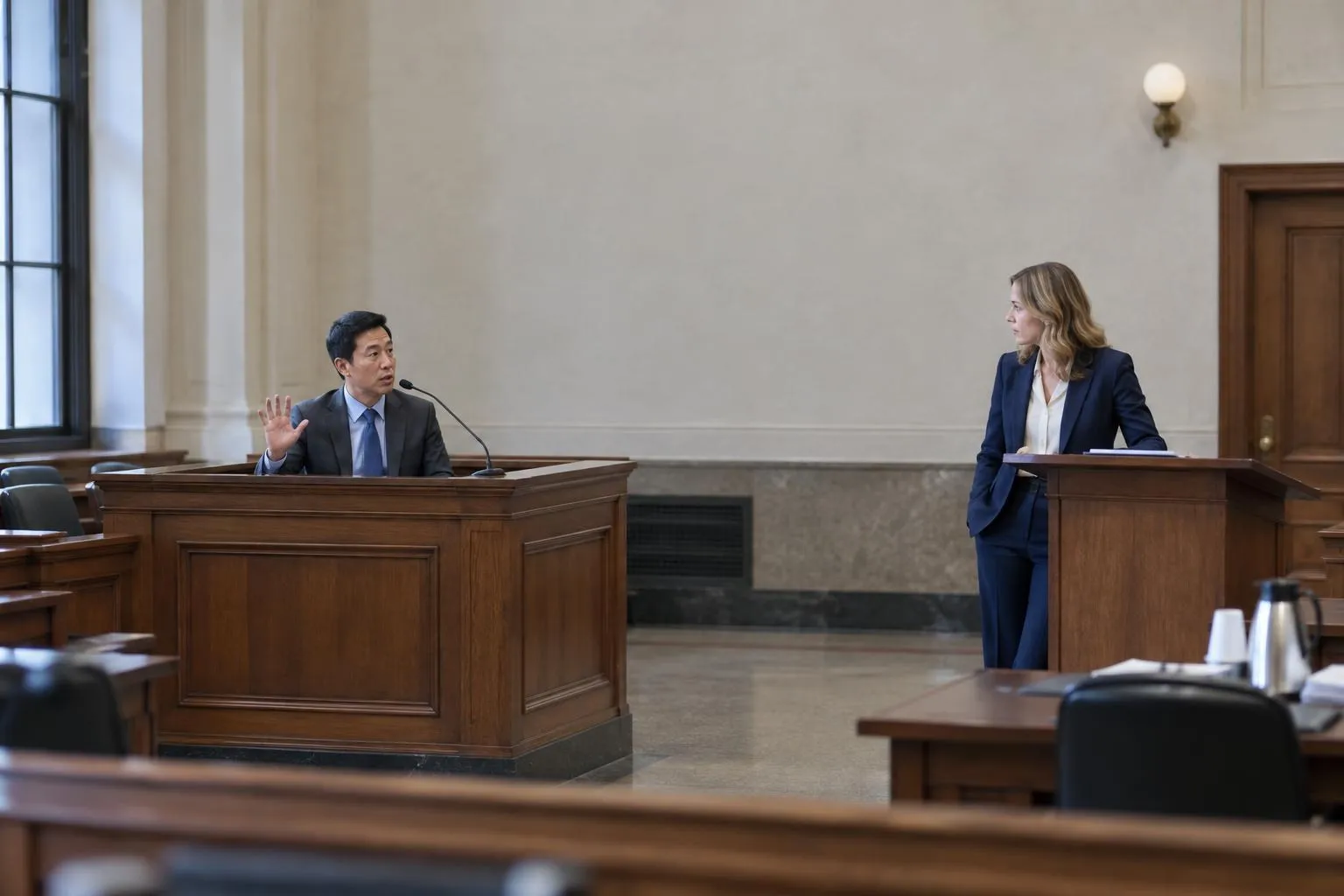
When a case goes to trial, the forensic accountant’s report becomes a key evidentiary document. It needs to do three things:
- Summarize the accessible data (so the court understands the information base)
- Explain why the investigation was necessary (context that humanizes the findings)
- Deliver detailed, cross-referenceable findings that can withstand challenge
Their expert testimony helps courts — which are often populated by people with limited financial literacy — understand what the numbers actually mean. Did this company’s revenue really decline by $2.4 million because of the defendant’s actions, or is the plaintiff’s calculation methodology inflated? That’s the question a forensic accountant answers.
They also rebut opposing experts. Litigation with significant financial damages almost always involves competing forensic accountants, and the ability to punch holes in the other side’s methodology is as valuable as building your own analysis.
Forensic vs. Traditional Accounting: The Real Distinction
| Dimension | Forensic Accounting | Traditional Accounting |
|---|---|---|
| Primary focus | Investigating financial crimes and fraud | Managing and reporting financial records |
| Core purpose | Analyze evidence for legal proceedings | Prepare financial statements and reports |
| Output format | Reports designed for courts and counsel | Financial statements, tax returns |
| Data sources | Transactions, emails, surveillance, interviews | Client-provided records |
| Adversarial context | Assumes findings will be challenged | Generally not adversarial |
| Certifications | CFE, CrFA, CFF (specialized) | CPA (general) |
Traditional accountants work with what clients give them. Forensic accountants work with what they can find, assume the records are incomplete, and are prepared to defend every conclusion under oath.
Future Trends Worth Knowing
Forensic accounting is evolving fast, mostly because financial fraud is evolving fast.
Cryptocurrency and digital asset tracing has become a major growth area. Blockchain forensics is now a genuine subspecialty, and firms are building teams specifically to trace assets through crypto wallets, DeFi protocols, and exchange accounts. If you’re dealing with a case that involves cryptocurrency in any form, ask specifically about this capability.
AI-assisted pattern detection is changing the discovery phase. Machine learning tools can now flag statistical anomalies in transaction datasets that would take human analysts weeks to find. This compresses the front-end of investigations significantly.
Remote work fraud has expanded the attack surface for employee theft schemes. The separation between corporate systems and home environments created new vectors for fraud, and the volume of cases involving unauthorized access to accounting systems has increased.
ESG and sustainability fraud is an emerging category. As companies face pressure to report environmental and social metrics, the forensic accounting community is developing methodologies to investigate greenwashing and ESG misrepresentation claims.
Practical Bottom Line
If you’re an attorney, insurer, or business owner with a financial dispute on your hands, here’s the decision tree:
- Is there potential litigation? Hire a forensic accountant now, not after you file. Early engagement protects evidence and shapes strategy.
- Do you suspect fraud? Don’t confront the subject. Call a forensic accountant first and let them advise on next steps.
- Do you need damages calculated? Make sure whoever you hire has testified as an expert witness before — not just prepared reports.
- Are crypto assets involved? Verify specific blockchain forensics experience before engaging.
The best forensic accountants are the ones who’ve been in the room when opposing counsel tried to dismantle their methodology — and held up. Ask for that experience specifically. Credentials matter; battle-tested credentials matter more.
For more on how forensic accountants work within specific legal contexts, read our guide on what to expect from financial expert witnesses and the complete guide to forensic accountants.
The money trail is always there. The question is whether you have the right person to follow it.
Done reading? Get quotes from forensic accountants near you.
Takes about a minute. Free, no obligation; providers reply to you directly.
Popular cities:
Nick built this directory to help trial attorneys find credentialed forensic accountants without wading through general CPAs who overstate their litigation experience — a gap he encountered when trying to source a qualified damages expert for a commercial dispute.