Get free quotes from forensic accounting near you
Takes about a minute. Free, no obligation; providers reply to you directly.
The first time I heard someone describe forensic accounting, I assumed it was just regular accounting with a cooler name — like how “cybersecurity” is just IT for people who watched too much Mr. Robot. Then I watched a forensic accountant reconstruct three years of a company’s financials from a pile of shredded documents and partial bank records, and I realized I had no idea what I was talking about.
This work is nothing like what you see on the tax prep commercials. It’s closer to detective work with a spreadsheet. Here’s what’s actually happening behind the scenes.
The Short Version:A forensic accountant investigates financial records to uncover fraud, quantify damages, and support legal proceedings. They’re hired by attorneys, corporations, and insurers — and they charge $150-$450/hour for it. If you’re involved in litigation with a financial component, you probably need one.
Key Takeaways
- Forensic accountants spend roughly 40% of their time on desk analysis, 30% on interviews and fieldwork, 20% writing reports, and 10% in court
- 85% of cases involve fraud — embezzlement, money laundering, or asset misappropriation
- A typical engagement starts well before any courtroom appearance; the investigation phase is where the real work happens
- Rates run $150-$450/hour; litigation support retainers typically start at $5,000-$20,000
What They’re Actually Hired To Do
Here’s what most people miss: forensic accountants aren’t brought in to audit your books. They’re brought in because something went wrong — or because someone needs to prove something went wrong.
The work breaks down into four main buckets:
| Case Type | Share of Work | Typical Client |
|---|---|---|
| Criminal investigations | 40% | Prosecutors, law enforcement |
| Litigation support | 30% | Trial attorneys |
| Insurance claims | 20% | Insurers, policyholders |
| Risk assessments | 10% | Corporate compliance teams |
That 30% litigation support category is where most attorneys encounter forensic accountants — commercial disputes, divorce proceedings, business interruption claims, partnership dissolutions. Any time there’s money in question and a courtroom involved, you need someone who can explain the numbers to a judge and withstand cross-examination.
The Engagement, Start to Finish
Nobody tells you that the billing starts the moment you pick up the phone. Here’s what a typical engagement actually looks like:
Week 1-2: Document Collection The forensic accountant requests everything — bank statements, tax returns, invoices, payroll records, general ledgers. In a fraud case, they’re looking for what’s missing as much as what’s there. A vendor who appears in a payment run but not in any purchasing records is a thread worth pulling.
Week 2-4: Forensic Analysis This is the 40% desk time. Using tools like ACL or IDEA (data analytics software built for this), they run pattern detection across sometimes millions of transactions. In the FTX collapse, forensic accountants traced $8 billion in hidden assets this way. In an Ohio embezzlement case, the same process located offshore accounts in a $10M scheme that led directly to convictions.
Reality Check:The movies show forensic accountants dramatically pointing at a single smoking-gun transaction. Real cases are built on hundreds of small anomalies that form a pattern. It’s methodical, not cinematic.
Week 3-5: Interviews Thirty percent of the job is talking to people — and not just the obvious suspects. Witnesses, colleagues, vendors, sometimes the subject of the investigation directly. The goal is to understand the narrative behind the numbers, because numbers don’t lie but they also don’t explain themselves.
Week 4-6: Quantifying Damages and Report Writing This is where litigation support earns its fee. A forensic accountant doesn’t just say “there’s fraud here.” They say “the fraud resulted in $2.3M in losses, calculated as follows, and here is how I verified each component.” That report has to survive a Daubert challenge — meaning opposing counsel will try to disqualify it, and the methodology has to be bulletproof.
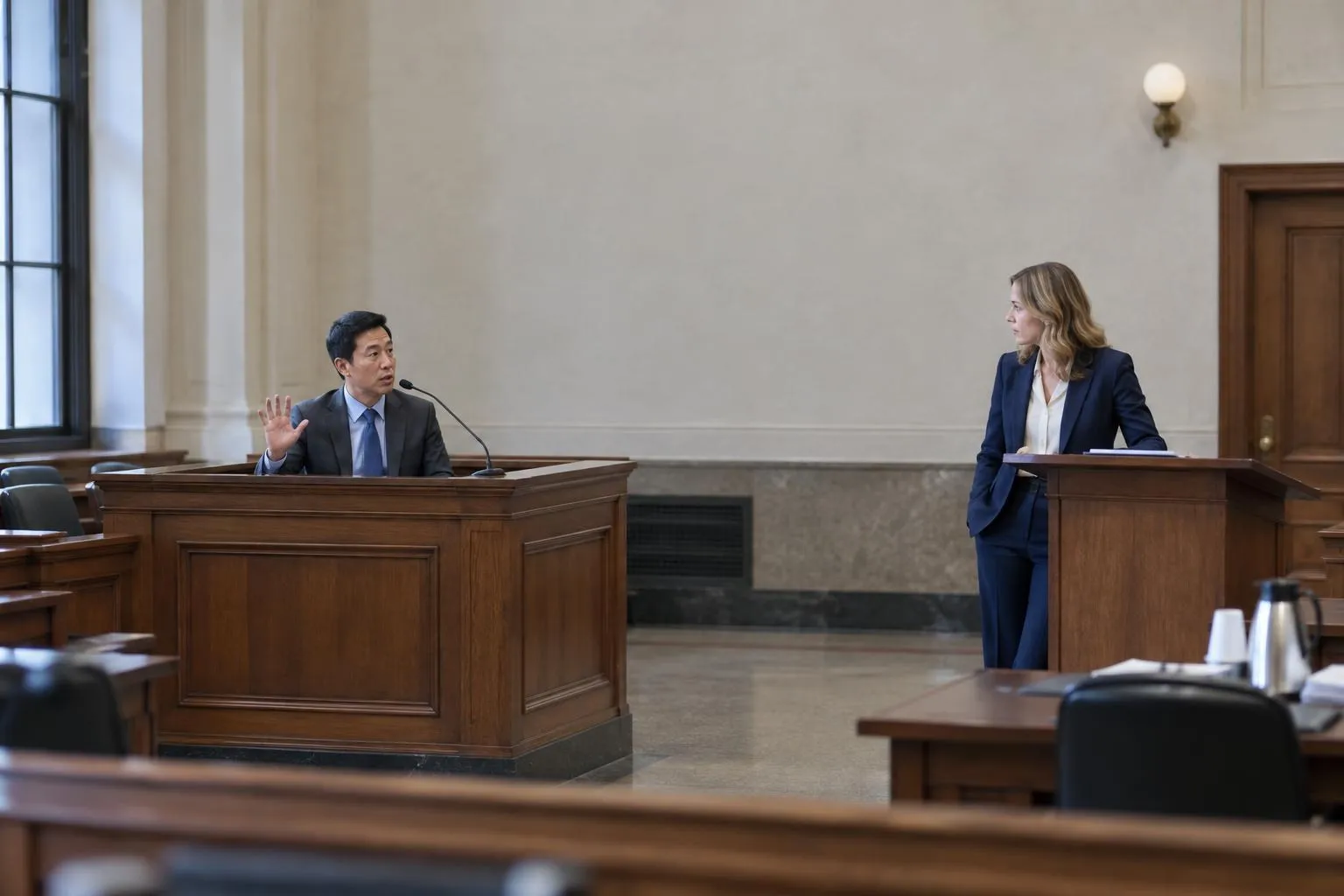
Court: When It Gets There Testimony runs $2,500-$5,000 per day. Senior experts with established courtroom track records charge more. This is where the investment in a credentialed expert pays off — a Certified Fraud Examiner (CFE) or CPA with forensic training can explain a complex financial scheme to a jury without losing them.
I’ll be honest: the report is where most cases are actually won or lost. Testimony is the public-facing moment, but it’s just the iceberg tip.
The Hard Parts Nobody Advertises
Data overload is real. Modern fraud cases can involve millions of transactions across dozens of accounts. The tools help — AI-driven analytics have changed what’s detectable — but someone still has to know what they’re looking at.
Cryptocurrency has changed everything. Crypto laundering and cyber-fraud are outpacing the traditional skill set faster than most practitioners want to admit. The best firms are now integrating blockchain forensics; everyone else is playing catch-up.
Legal scrutiny is brutal. Every methodology gets challenged. In the Bernie Madoff case, forensic accountants had to reconstruct $65 billion in losses from transaction records that were deliberately obscured. The ACFE notes that forensic accountants contribute to asset recovery in 90% of prosecuted fraud cases — which means their work has to hold up under the most adversarial conditions imaginable.
Pro Tip:When evaluating a forensic accountant for litigation support, ask specifically about their Daubert track record. A great analyst who’s never been accepted as a court expert is a liability in federal litigation.
What Credentials Actually Mean
CFE (Certified Fraud Examiner): Required by 70% of employers. Issued by ACFE. The baseline credential for fraud work.
CPA with forensic training: Standard for damages quantification and litigation support.
CFF (Certified in Financial Forensics): AICPA credential specifically for forensic accounting. Strong signal for litigation-heavy work.
The salary range reflects the credentialing: government roles (FBI, SEC) average $120,000-$180,000. Private sector and Big Four consulting runs $200,000-$350,000 for experienced practitioners. The hourly rate gap between a fresh forensic accountant ($150/hour) and a senior expert witness ($500/hour) is mostly courtroom experience and credentialing.
Practical Bottom Line
If you’re an attorney or business owner who’s never hired a forensic accountant, here’s your decision framework:
- Money is in dispute and there’s litigation → you need litigation support
- You suspect internal fraud → you need a fraud examiner, not an internal audit
- Insurance claim is contested → a forensic accountant quantifies losses in terms insurers and courts accept
- Divorce involves business assets → valuation and tracing require forensic-level analysis
Budget $5,000-$20,000 for an initial retainer on a mid-complexity case. Add $2,500-$5,000/day if testimony is likely. Get a CFE or CPA with CFF designation — the credential isn’t just alphabet soup, it’s a signal that the methodology will hold up when challenged.
For more on how to find and evaluate the right expert for your case, see The Complete Guide to Forensic Accountants.
The work is methodical, expensive, and often unglamorous. It’s also exactly what you need when the numbers don’t add up and the stakes are high.
Done reading? Get quotes from forensic accountants near you.
Takes about a minute. Free, no obligation; providers reply to you directly.
Popular cities:
Nick built this directory to help trial attorneys find credentialed forensic accountants without wading through general CPAs who overstate their litigation experience — a gap he encountered when trying to source a qualified damages expert for a commercial dispute.